


3.3 Copyright and Licensing


Objectives of the topic
Understand basic copyright principles applicable to educational contexts and digital media – aligned to DigCompEdu area 2.3: Managing, protecting and sharing digital resources
Identify and correctly apply Creative Commons licenses when using or sharing educational content – aligned to DigCompEdu area 2.3: Managing, protecting and sharing digital resources
Search for and evaluate openly licensed content using online platforms and search tools – aligned to DigCompEdu area 2.1: Selecting digital resources
License original work appropriately for reuse by others using Creative Commons tools – aligned to DigCompEdu area 2.2: Creating and modifying digital resources
Apply ethical guidelines when using AI-generated content, including attribution, transparency, and data safety – aligned to DigCompEdu area 2.3: Managing, protecting and sharing digital resources and area 6.1: Information and media literacy
Demonstrate awareness of evolving copyright challenges in education, especially related to AI and digital sharing –aligned to DigCompEdu area 6.1: Information and media literacy
Theoretical Description
In an increasingly digital and collaborative educational environment, understanding copyright and licensing is essential for educators, trainers, and content creators. As more teaching materials, multimedia resources, and AI-generated content are shared and reused, the legal and ethical responsibilities surrounding intellectual property must not be overlooked. This topic explores the foundations of copyright law, the use of openly licensed materials through Creative Commons, and the evolving challenges posed by AI-generated content. Educators will learn how to legally use, adapt, and share resources, apply appropriate licenses to their own work, and navigate complex scenarios involving ownership, attribution, and reuse. By mastering these principles, they ensure not only compliance with the law but also uphold academic integrity and promote open, responsible practices in teaching and learning.
1 Understanding Copyright Basics in Education
Copyright is a legal framework that protects the rights of creators over their original works, including texts, images, music, video, and software. In education, understanding copyright is essential for using and sharing digital materials ethically and legally. Educators frequently use third-party content to enrich their lessons, but without a solid understanding of copyright rules, this can lead to accidental infringement.
Copyright is a legal right that grants the creator of an original work exclusive rights to use, reproduce, distribute, and modify that work for a specific period.
Automatically applied: In most countries, copyright applies automatically as soon as the work is created—no registration needed.
Duration: Typically lasts for the author’s lifetime plus 50–70 years, depending on jurisdiction.
Many educators mistakenly believe that copyright rules do not apply in educational settings, but this is a misconception. A common myth is that any material found online is free to use; however, content published on the internet is still protected by copyright unless explicitly licensed for reuse. Another widespread belief is that educational use automatically qualifies as fair use. While certain exceptions exist for teaching purposes, they are limited and vary by country. Additionally, the assumption that non-commercial use—such as showing a film in class or distributing slides—automatically makes it legal is not always accurate. Regardless of intent, educators must understand the boundaries of copyright law and verify the permissions before using third-party materials.
In educational settings, certain uses of copyrighted material may be allowed under doctrines such as fair use (in the United States) or educational exceptions (in other legal systems). These provisions typically permit limited use of copyrighted works for purposes such as criticism, commentary, teaching, scholarship, or research. For example, quoting small portions of a text for analysis or showing a brief video clip for classroom discussion may be permissible. Similarly, sharing materials within a closed, password-protected learning environment—such as a virtual classroom—may fall under these allowances. However, such use must meet specific criteria and is not unlimited; the amount used, the purpose, and the effect on the market for the original work are all taken into account. Educators should always consult their national legislation or institutional policies to ensure compliance when relying on such exceptions.
Understanding the basics of copyright helps educators avoid legal risks and model ethical behavior for students. While educational settings often allow more flexible use, these rights are not unlimited. Teachers should develop the habit of checking permissions, using openly licensed or original content when possible, and giving credit where it’s due.
2 Open Licensing and Creative Commons
In an age of digital sharing and collaborative teaching, open licensing plays a key role in enabling educators to legally use, adapt, and share content. One of the most widely adopted open licensing systems is Creative Commons (CC), which provides a simple, standardized way to give public permission to use creative works under specific conditions. Understanding how Creative Commons licenses work is essential for teachers who wish to both reuse others' materials and license their own work for sharing.
An open license allows others to use, share, or modify a work without needing to ask permission, provided they follow the license terms.
Creative Commons licenses are the most commonly used open licenses in education and content creation.
License | Meaning |
CC BY – Attribution | Free to use, modify, and share—even commercially—if credit is given |
CC BY-SA – Attribution + ShareAlike | Same as CC BY, but derivatives must use the same license |
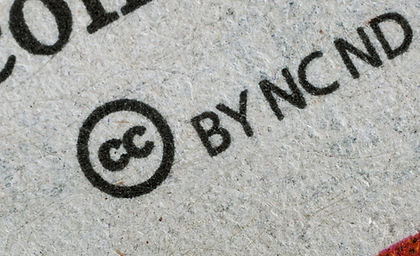
CC BY-ND – Attribution + No Derivatives | Can share but not modify; credit required |
CC BY-NC – Attribution + NonCommercial | Can modify/share, but not for commercial purposes |
CC BY-NC-SA – Attribution + NonCommercial + ShareAlike | Like above, but must use the same license |
CC BY-NC-ND – Attribution + NonCommercial + No Derivatives | Most restrictive; share only, no changes or commercial use |
Finding Creative Commons–licensed content has become increasingly easy thanks to dedicated search tools and filtering options on popular platforms. One of the most comprehensive resources is the Creative Commons Search, which aggregates openly licensed images and other media from across the web. Additionally, many platforms provide built-in filters to help users locate CC-licensed content. For example, Flickr allows filtering for CC images, Wikimedia Commons hosts a large collection of educational visuals, and YouTube includes a filter to show videos available under Creative Commons. Google Advanced Search also enables users to filter results by "Usage Rights" to find content that can be reused or modified. These tools help educators ensure they are using materials legally and ethically, saving time while expanding their access to high-quality open resources.
Applying a Creative Commons License to Your Work
Applying a Creative Commons (CC) license to your own work is a straightforward but important step toward contributing to the global pool of open educational resources. To begin, you should select the license that best matches your preferences for how others can use your content. This can be done easily through the official Creative Commons license chooser tool at creativecommons.org/choose, which guides you through a few questions and then provides the appropriate license text and icon. Once you've chosen your license, it's essential to make it visible and clear. This means including a statement such as “This work is licensed under a Creative Commons Attribution 4.0 International License,” and linking it directly to the license page. You can add this notice to the footer of your documents, the last slide of a presentation, or the description section of a website or video. Including the official license badge next to the statement can also increase clarity. By openly licensing your content, you not only clarify the terms of reuse but also encourage responsible sharing and adaptation by others in the educational community. This practice supports the global movement toward openness, transparency, and equity in education.
Creative Commons licensing helps foster a culture of sharing, remixing, and open educational practices. Educators who understand these licenses can confidently use and contribute to open content, expanding access to quality educational materials worldwide—legally and ethically.
1 AI-Generated Content and Legal Uncertainty
The rise of AI-generated content—such as text, images, code, and video—has opened new opportunities for educators and content creators. However, it has also introduced significant legal and ethical uncertainties, especially regarding copyright ownership, attribution, and fair use. As AI tools like ChatGPT, DALL·E, and others become commonplace in educational settings, it’s essential to understand the current debates and apply best practices when using or distributing such content.
Who Owns AI-Generated Content?
· No clear global consensus: Many legal systems still lack definitive rulings on whether AI-generated content can be copyrighted and, if so, by whom.
· In some jurisdictions (e.g., U.S. and EU), works generated entirely by non-human systems are often not eligible for traditional copyright protection.
· Creators who prompt or guide AI tools may have limited rights over the output—especially if they significantly shape it.
· Platforms’ Terms of Use (e.g., OpenAI, Adobe, Canva) often include clauses about content rights and restrictions—these must be checked before reuse.
Ethical Considerations for Educators
· Transparency: Always disclose when AI tools are used to generate content, especially in published or assessable materials.
· Attribution: While not always legally required, it is good practice to indicate the use of tools like ChatGPT or DALL·E to ensure intellectual honesty.
· Accuracy and bias: AI-generated content may contain errors, misinformation, or cultural biases—critical review is essential before use.
· Misuse and dependency: Over-reliance on AI may hinder original thought, especially in student work. Educators should model thoughtful and balanced use.
To navigate the uncertainties surrounding AI-generated content, educators and creators should adopt responsible and transparent practices. AI tools should be viewed as assistants that support—not replace—educator expertise and originality. When AI is used to generate or refine educational content, it is good practice to acknowledge this, either in footnotes, captions, or author’s notes, especially when sharing materials publicly or in academic contexts. Additionally, it is crucial to avoid uploading personal, sensitive, or student-related data into AI systems, as this may conflict with institutional data protection policies or privacy regulations such as the GDPR. Staying informed about institutional guidelines and evolving national or international legal frameworks is also essential. By using AI tools thoughtfully and ethically, educators can model critical digital literacy while leveraging the benefits of emerging technologies.
AI-generated content offers exciting potential in education but presents unresolved legal and ethical challenges. Until clearer legislation emerges, educators should adopt cautious and transparent practices, prioritize academic integrity, and help students develop a critical understanding of AI’s capabilities and limitations.
Quiz
Now, when You have finished the theoretical part, we invite You to take the quick knowledge test, so You know where You are regarding the topic:
We have also prepared practical activity for this topic, which can be accessed by pressing the button below.
Funded by the European Union. Views and opinions expressed are however those of the author(s) only and do not necessarily reflect those of the European Union or the European Education and Culture Executive Agency (EACEA). Neither the European Union nor EACEA can be held responsible for them.
